From PVD System Selection to Full Integration
Are you considering purchasing a PVD system or introducing in-house PVD coating? We can help you select the right technology, compare available equipment, and integrate the PVD system into your production.
We are not tied to a single manufacturer. We have experience with European and Chinese PVD systems, different configurations, and various technologies — from magnetron sputtering and HiPIMS to industrial coating lines.
Why Choosing a PVD System from a Catalogue Is Not Enough
A PVD system needs to match what you actually want to produce. Choosing the right equipment is not only about chamber size, the number of sources, or the purchase price. The key question is whether a particular configuration can reliably produce the required coating on your parts, at the required quality and production capacity.
A poorly selected PVD system can be unnecessarily expensive, difficult to operate, or unable to achieve the required adhesion, uniformity, color consistency, or productivity.
That is why we do not start with a machine brand. First, we need to understand:
- what you want to coat
- what materials your parts are made of
- what properties the coating needs to have
- what production volume you require
- what space and operating conditions you have
- what your investment and operating budget is
Based on these requirements, we recommend a suitable PVD technology and system configuration.
We Don’t Sell One Brand. We Find the Right Solution.
A PVD equipment manufacturer will naturally offer systems from its own portfolio. AdvaMat looks at the project from the perspective of your product, your process, and the return on investment.
We compare suitable solutions from European and Chinese manufacturers and help you choose a PVD coating system whose capabilities you will actually use. The goal is not the biggest or most expensive machine, but a technology that will work reliably in your production over the long term.
We evaluate not only the purchase price, but also:
- operator and maintenance requirements
- achievable coating quality and coating types
- production capacity and process time
- investment and operating costs
- availability of spare parts
- level of automation
- options for future expansion
- service and technical support
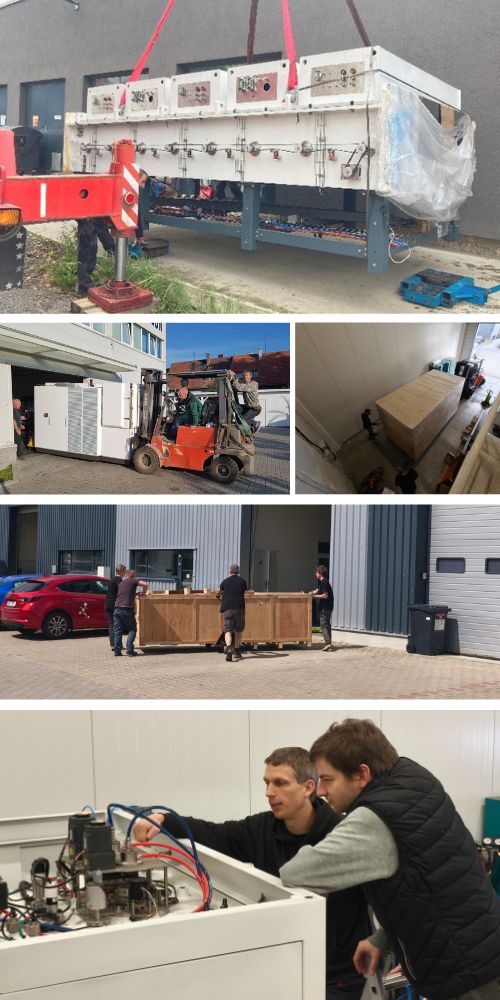
We know how different PVD systems perform in real-world production.
We have hands-on experience with both laboratory and industrial coating equipment. We work with systems from Kolzer, CemeCon, and Oerlikon Balzers, as well as laboratory systems, custom-built PVD equipment, and inline systems from Chinese manufacturers.
We also support manufacturing companies using other types of PVD systems — helping with equipment selection, process setup, troubleshooting, recipe optimization, and the introduction of new coatings.
Our experience includes:
- DC magnetron sputtering
- pulsed DC magnetron sputtering
- MF – Medium Frequency magnetron sputtering
- RF sputtering
- HiPIMS – High Power Impulse Magnetron Sputtering
- combined HiPIMS/DC systems
- laboratory PVD systems
- industrial coating chambers
- custom-built PVD equipment
- inline PVD coating lines
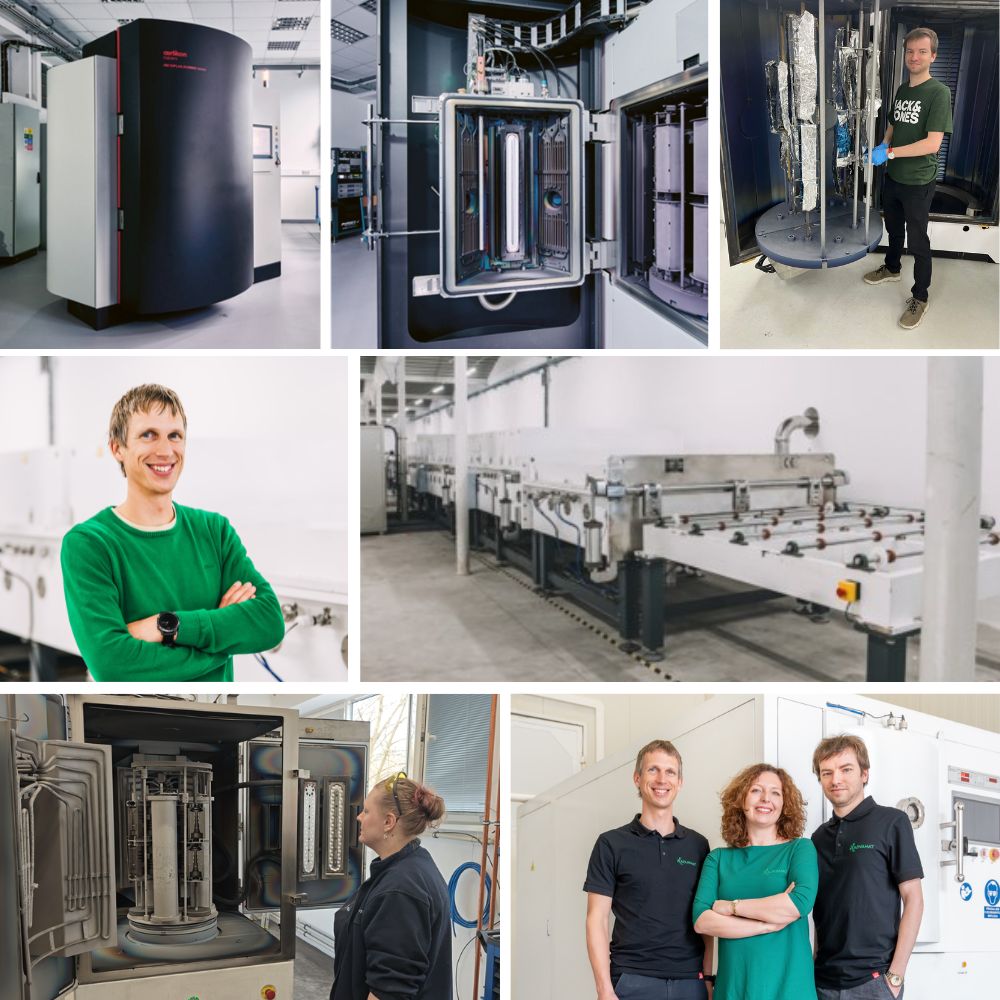
PVD systems we work with: laboratory and industrial equipment from Kolzer, CemeCon and Oerlikon Balzers, as well as custom-built European and Chinese systems.
From the First Test to PVD System Start-Up

Assessment of Production Requirements
We review your parts, materials, required coating properties, production capacity, available space, and planned investment.

Trial Coating
We first test the coatings on your actual parts. This allows us to verify which technology and process can realistically achieve the required result.

PVD Technology Selection
We compare magnetron sputtering, HiPIMS, and other suitable technologies. We recommend the source configuration, chamber size, part handling, and required accessories.

Supplier Comparison
We help you compare PVD systems from European and Chinese manufacturers from a technological, operational, and economic perspective.

Cost-Benefit Analysis
We assess investment costs, production capacity, expected operating costs, return on investment, and the difference between in-house coating and external coating services.

Delivery and Integration
We arrange the delivery or integration of the PVD system into your production and ensure compatibility with the required technologies and infrastructure.

Installation and Start-Up
We support installation, commissioning, testing, and process fine-tuning so that the system does not simply achieve vacuum, but produces the required coating consistently and repeatably.

We train operators and technologists and provide support with recipe optimization, troubleshooting, laboratory measurements, and further process development.
A PVD System Alone Does Not Guarantee a High-Quality Coating
Successful implementation of PVD technology does not end with equipment installation. The final coating quality depends on surface preparation, part fixturing, geometry, process parameters, coating recipes, plasma control, and quality evaluation.
That is why we combine equipment selection with coating development, laboratory testing, and process know-how. We help you move from the initial requirement to a stable and repeatable coating process.
Frequently Asked Questions
How much does an industrial PVD system cost?
The price of a PVD system can vary significantly. Simpler laboratory or basic production systems may start at around EUR 40,000, while advanced industrial PVD systems and automated coating lines can cost several hundred thousand euros. For larger and more complex solutions, the total investment can exceed EUR 2 million.
The final price depends on the chamber size, technology used, number of sources, production capacity, level of automation, and required accessories. The budget should also include transport, installation, preparation of the production site, cooling, training, service, and consumables. For this reason, an accurate price can only be determined once the required coating, parts, and production capacity are defined.
If investing in your own PVD system is too expensive or does not yet make economic sense, you can use PVD coating as a service. We first test the coating on your actual parts and can then provide regular coating services without the need to invest in your own equipment.
How do I choose the right PVD system?
The selection should take into account the material and geometry of your parts, the required coating, production capacity, surface quality, available space, budget, and service options. AdvaMat first verifies the process on your actual parts and then recommends a suitable technology and system configuration.
Is a European or Chinese PVD system better?
here is no general rule that European or Chinese PVD systems are automatically better. What matters is the specific manufacturer, machine configuration, quality of components, level of control and automation, service, availability of spare parts, and above all the system’s ability to produce the required coating at the required quality and capacity.
Chinese systems can offer a very attractive price-performance ratio, while some European systems provide more advanced automation, established service support, or specific technological capabilities.
However, we recommend evaluating each individual offer rather than making a decision based only on the country of origin. Ideally, trial coating should be carried out on real parts before purchase, with clearly defined performance requirements used to compare the available solutions.
What is the difference between PVD, magnetron sputtering, and HiPIMS?
PVD is a general term for a group of vacuum-based thin-film deposition technologies. Magnetron sputtering is one type of PVD technology. HiPIMS is an advanced form of magnetron sputtering that uses short, high-power pulses and highly ionized plasma. We explain these technologies in more detail on our PVD technology
Can a PVD system be integrated into an existing production line?
Yes. Integration includes assessing the available space and infrastructure, connecting utilities, installation, process setup, validation tests, operator training, and integration with surface pre-treatment and quality control.
Can you also help us with a PVD system we have already purchased?
Yes. We help companies bring existing PVD systems into stable and efficient operation. We provide process parameter optimization, troubleshooting of coating uniformity and adhesion issues, implementation of new recipes, operator training, and assessment of possible equipment upgrades.
For long-term cooperation, we created AdvaMat Club, which provides continuous access to our experts, laboratory facilities, and technical know-how. Membership can include priority laboratory capacity, up to 15 measurements per month, remote consultations, on-site technical support, the AdvaMat App, and shared project management.
Whenever you need to adjust a process, solve an operational issue, or introduce a new coating, expert support is available on an ongoing basis.
Can we test the coating on our parts before purchasing a PVD system?
Absolutely. We consider trial coating on actual parts an essential step before selecting and purchasing a PVD system. It allows us to verify whether the chosen technology can produce the required coating, achieve the necessary adhesion, uniformity, appearance, and functional properties, while also handling the specific geometry and material of the product.
Based on the test results, we can recommend the most suitable PVD process, system configuration, and required performance. This significantly reduces the risk of investing in equipment that is not optimal for your products and production requirements.
Would you like to get more out of your PVD system?
Tell us what equipment you use, what you coat, and what problem you need to solve. We will recommend the most suitable training content, duration, and format.
Ing. Martin Daněk, Ph.D.
[email protected]